How to Plan a Group Trip Without the Stress

From my experience, the secret to a drama-free group trip isn't a magical destination or a perfectly balanced itinerary. It’s what you do before any of that. The entire plan can be broken down into three main stages: alignment, decision-making, and booking. Nail the alignment phase, and you’ve already won half the battle.
This means getting everyone on the same page about the trip's purpose, budget, and ground rules before a single destination is even whispered. Trust me, this foundational work prevents the whole thing from spiraling into a chaotic mess in the group chat.
Laying the Foundation for a Successful Group Trip
We’ve all been there. The moment someone says, “Let’s plan a trip!” the excitement is quickly drowned out by a flood of competing ideas. One person wants a chill beach vacation, another is already mapping out a mountain hike, and someone else is dead-set on finding the best restaurants. This is exactly why your very first conversation as a group is the most important one you’ll have.
Before anyone starts scrolling through travel blogs or checking flight prices, get everyone together—virtually or in person—for a big-picture chat. The goal isn't to lock in details. It's to align on the fundamentals and avoid the "option paralysis" that kills so many great trip ideas before they even start.
Define the Trip's Purpose
First things first, ask the simple but crucial question: What is the "why" behind this trip?
Is this a milestone celebration, like a 40th birthday that calls for something special? Or is it the annual friends' reunion where the main goal is just catching up, meaning a simple cabin would be perfect? Knowing the purpose sets the entire tone.
For instance, a bachelorette party’s "why" is celebrating the bride, so her opinion carries the most weight. For a big family reunion, the purpose might be creating memories across generations, which means you'll need activities that work for both toddlers and grandparents.
My Go-To Tip: I always frame the trip's purpose as our "North Star." Whenever a debate pops up later on, we can come back to it. "Does this activity really fit our goal of a relaxing getaway, or is it just adding stress?" It’s a surprisingly effective way to get back on track.
Get a Rough Consensus on Timing
Next up is timing. You don't need exact dates just yet, but you absolutely need a general window. Are we talking about a long weekend in the spring, a full week in July, or maybe ten days over the winter holidays?
Figuring this out early helps you see everyone's real-world constraints and availability. It also immediately starts to narrow down your destination options based on seasonality. A trip to Phoenix in August, for example, is probably not going to fly with most groups.
As you talk about timing, consider these key points:
Trip Length: Is this a quick 3-day weekend escape or a longer 10-day international adventure?
Time of Year: What seasons are feasible for the majority of the group?
Blackout Dates: Get everyone to list any important dates to avoid, like weddings, major work deadlines, or other family commitments.
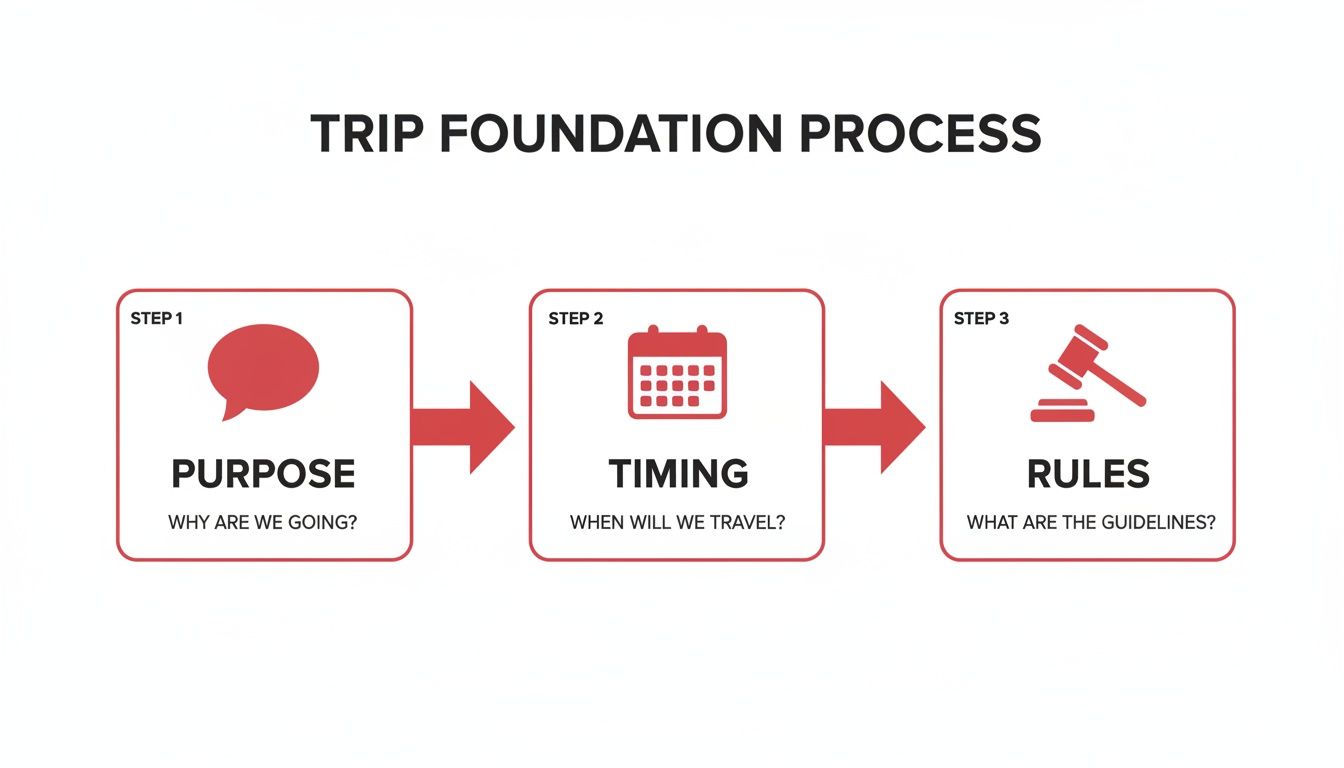
To make this initial stage even clearer, I've found it helpful to think of it as a simple checklist. Getting these three things aligned is the bedrock of your entire plan.
Here’s a quick summary to help you get your group on the same page before diving into the nitty-gritty details.
Initial Group Trip Alignment Checklist
Phase | Key Question to Answer | Why It Matters |
|---|---|---|
Purpose | What's the main reason for this trip? (e.g., celebration, relaxation, adventure) | Sets the tone and acts as a tie-breaker for all future decisions. |
Timing | When can we go, and for how long? (e.g., a week in summer, a long weekend in fall) | Immediately narrows down destination options and confirms everyone's availability. |
Ground Rules | What are the non-negotiables? (e.g., budget range, travel style) | Prevents major conflicts over money and expectations down the road. |
Tackling these big-picture items first creates a shared understanding that makes everything else—from budgeting to booking—so much smoother. You build a consensus that keeps the planning process collaborative and, most importantly, fun.
Let's Talk About Money (Without Making It Awkward)
Ah, the money talk. It’s easily the most uncomfortable part of planning a group trip. I've seen it sink more travel plans than bad weather and flight cancellations combined. But it doesn't have to be a source of stress. The key is to get it out of the way early and do it smartly.
Forget dropping that dreaded, open-ended question in the group chat: "So, what's everyone's budget?" That approach puts people on the spot and almost never gets you honest answers. You need a better strategy.
Frame the Discussion Around Travel Styles, Not Dollar Signs
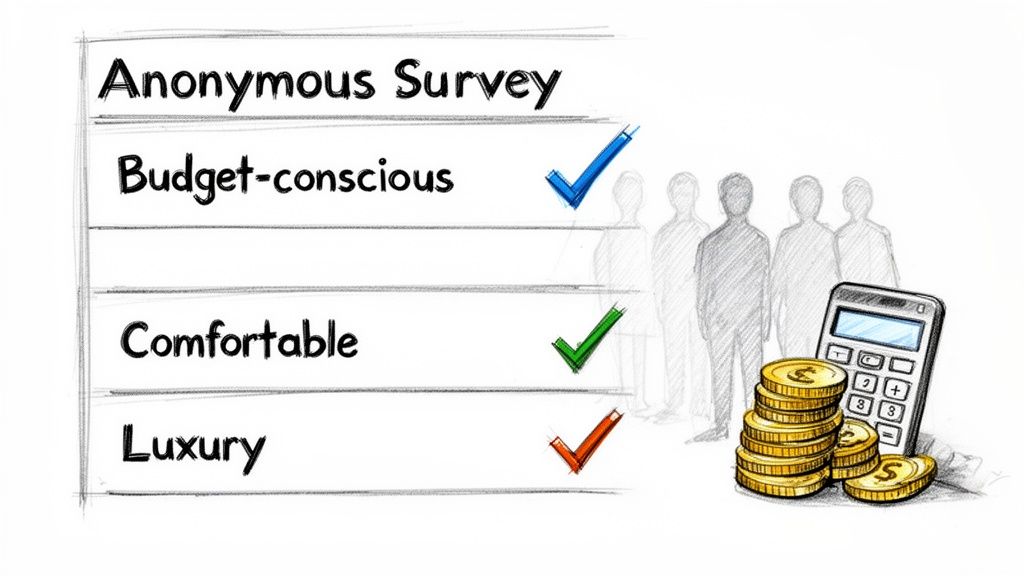
Instead of asking for a number, present a few clear travel styles. This lets people signal their financial comfort level without having to type out a specific dollar amount. It’s less about a hard number and more about aligning on the overall vibe of the trip.
Try floating these categories to the group:
Budget-Conscious: We're thinking hostels or basic Airbnbs, cooking some of our own meals, and leaning into free activities like hiking and park days.
Comfortable: We’re aiming for mid-range hotels or a nice entire rental home. We'll mix dining out with casual spots and are happy to pay for key tours and experiences.
Luxury: We're looking at boutique hotels or premium properties, ready for some fine dining, and interested in private tours. Convenience and quality are the top priorities.
This simple reframing immediately tells you where everyone stands. You're not talking about money; you're talking about expectations.
Use Anonymous Surveys for Brutal Honesty
Even with well-defined tiers, peer pressure is real. No one wants to be the person who holds the group back. This is where anonymous surveys become your secret weapon. Giving people a private way to vote ensures you get the real story on what everyone can actually afford.
Poorly managed cost discussions are a massive problem. The global Group Travel Market was valued at a staggering $369.8 billion in 2024, yet so many trips fall apart before they begin. Ineffective group chats cause endless debates over money, derailing up to 50% of initial trip ideas. Modern platforms like MyPerfectStay tackle this head-on by using private surveys to collect individual budgets, bypassing the disorganization that leads to a 30% trip abandonment rate. You can discover more about these market trends and how they impact travel.
A Hard-Earned Lesson: Never, ever assume everyone in your friend group is in the same financial boat. People's lives change. A friend might be saving for a down payment, paying off student loans, or just got laid off. Anonymity respects that reality and helps you plan a trip that everyone can genuinely enjoy, not just endure.
Once the results are in, you can find the common ground. If most people voted "Comfortable" but a couple voted "Budget-Conscious," you know your job is to find a brilliant middle ground that works for the whole crew.
Build a Master Budget (and an "Oops" Fund)
With a clear budget direction from your survey, it's time to build a transparent master budget. This should be a shared document—a Google Sheet works perfectly—that everyone can see. Think of it as your financial roadmap.
Break your budget down into three core components:
Major Fixed Costs: These are the big, non-negotiable items you'll book first, like flights and lodging.
Variable Daily Expenses: This is your best estimate for day-to-day spending on food, local transit, drinks, tickets, and souvenirs.
A Contingency Fund: This is non-negotiable. Always add an extra 10-15% to the total budget for the unexpected. This "oops" fund covers a missed train, a pricey-but-worth-it last-minute tour, or a cab ride home after the subway closes. It prevents those awkward on-the-spot requests for more money.
By laying out all the potential costs from the very beginning, you manage expectations and prevent any nasty financial surprises later. This straightforward approach to the money conversation builds trust and sets your trip up for success.
Alright, you've tackled the budget conversation. That’s often the biggest hurdle, so give yourselves a pat on the back. Now you get to the fun part everyone has been daydreaming about: deciding where to go and what to do.
This is also where planning can get messy. The initial excitement can quickly sour as everyone throws out conflicting ideas. The secret to keeping the peace isn't to avoid opinions, but to give them structure.
From Endless Debate to a Clear Shortlist
First things first: get out of the chaotic, free-for-all group chat. Instead, the trip lead should put together a tight shortlist of 3-5 destinations that actually fit the budget and vibe you all agreed on. If the group voted for a "Comfortable" budget for a long weekend, now is not the time to suggest a five-star resort in Bora Bora. Keep it real.
Once you have that shortlist, it's time for a vote. But a simple "which one do you like best?" poll can be misleading. A much smarter way to do this is with ranked-choice voting. Just have everyone rank the destinations from their absolute favorite down to their least favorite.
This approach gives you a much clearer picture of what the group really wants. You might find that while "Beach Getaway" was only one person's top pick, it was everyone else's second choice, making it the perfect compromise that keeps the whole group happy. This democratic method makes everyone feel heard and helps you land on a destination that has genuine buy-in.
For example, a bachelorette party trying to decide on a destination could have a shortlist like this:
Nashville: For the live music, amazing food, and fun honky-tonk scene.
Scottsdale: For poolside lounging, spa days, and chic nightlife.
Miami: For the beaches, Art Deco architecture, and high-energy clubs.
By having everyone rank these, you can immediately see which city best hits the mark for the entire group, preventing one or two loud voices from railroading the decision.
Let Data Decide Your Daily Activities
Picking a destination is one thing, but figuring out the day-to-day activities is where you really see different personalities clash. This is especially true for groups with a wide range of ages, like a multigenerational family trip. A teenager's idea of a good time is rarely the same as their grandparent's.
And this isn’t a small problem. The global travel market is expected to hit a staggering $12,280 billion by 2032, with leisure travel growing 4% annually. A solid 10% of that is multigenerational travel, yet traditional chat-based planning is incredibly inefficient—a mind-boggling 60% of individual preferences get completely ignored. Smart voting can fix this by analyzing everyone's interests and energy levels to surface activities that get a high "match score" for the whole group. You can see more data on the future of leisure travel here.
I saw this play out perfectly with a friend's family reunion in Hawaii. The group included serious hikers, total beach bums, and a couple of history buffs. Instead of arguing in circles, they used a tool to vote on a long list of potential activities. The results instantly showed a high "match score" for a Pearl Harbor tour and a traditional luau—two things everyone was genuinely excited about. It also flagged a strenuous volcano hike as divisive, so they simply made it an optional activity for the die-hards. Everyone won.
This is the beauty of letting the numbers do the talking. You're no longer debating opinions; you're just looking at the data to see which activities will bring the most joy to the most people. It makes it easy to build an itinerary that balances different tastes and energy levels, turning what could have been a week of arguments into a truly collaborative plan. The result is a trip that doesn't just work on paper—it's one that every single person is counting down the days for.
Building Your Itinerary and Locking In Reservations
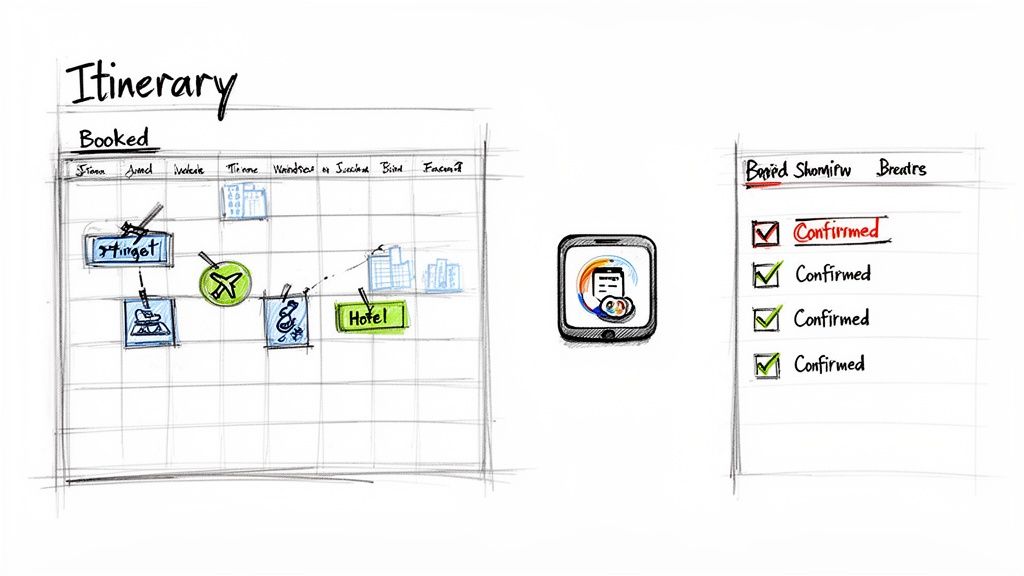
This is the moment of truth. You’ve got a destination, everyone’s (mostly) agreed on what to do, and the excitement is building. Now you have to turn those plans into actual, non-refundable reservations.
The first big question is always who handles the money and the bookings. Do you nominate one hyper-organized person to be the "trip CFO"? Or does everyone fend for themselves? Honestly, the right answer completely depends on your group.
Choosing Your Booking Strategy
For a weekend away with a few close friends, the path of least resistance is often having one person book the shared stuff. Think one Airbnb or VRBO booking, managed by one person who then gets paid back via Venmo or Zelle. It's simple, fast, and ensures you snag that perfect rental before someone else does.
But when it comes to flights, letting everyone book their own often makes more sense.
This gives people the freedom to:
Cash in their own frequent flyer miles or credit card points.
Stick with their preferred airline for status perks (hello, free checked bags).
Pick flight times that fit their work schedule or budget.
The trick is to be firm on the deadline. A clear directive like, "Everyone needs to book their flight to Lisbon and send me their arrival time by May 15th," works wonders. It creates accountability without making you feel like you're herding cats.
For bigger, more complex trips like a family reunion or corporate retreat, centralizing all the bookings is a lifesaver. Having a single planner negotiate group rates, block off seats on the same flight, and manage all the logistics prevents chaos. It avoids the nightmare scenario where Uncle Jerry forgets to book his room entirely.
The best strategy is the one that causes the least friction. If your group is full of savvy travelers, let them handle their own flights. If half the group gets overwhelmed by booking sites, a single point person is your best bet.
Create a Central Hub for All Information
Once the bookings start rolling in, you’ll be flooded with information. Confirmation codes, flight numbers, and payment receipts get lost in the noise of a group chat almost instantly. This is why you absolutely need a single source of truth.
A shared Google Sheet is the gold standard here, but a dedicated trip-planning app also works perfectly. This document becomes the master plan that anyone can check at any time, answering questions before they’re even asked.
You can use a simple spreadsheet to track who has paid for what, list everyone’s flight arrival details, and keep the address for the rental handy. It’s also the perfect place to drop in links to tour confirmations and dinner reservations. You can even find great insights on how to choose the perfect accommodation for your group at https://myperfectstay.com/.
The Power of a Voted-On Itinerary
Getting from a list of ideas to a booked-and-paid-for itinerary is where most group trips stall. This is especially true for corporate travel, where a projected $1.64 trillion in global spending by 2025 is often slowed down by old-school planning methods.
Instead of endless email chains, a modern approach that generates an itinerary from quick surveys can make things move dramatically faster. We've seen groups make decisions 40% faster using these tools. In a travel landscape that's busier than ever, that speed is a huge advantage.
This isn’t just about being efficient; it’s about creating a better experience. You get to move forward with bookings confidently, knowing the plan is based on what the majority actually wants. The final result is a clean, shareable schedule that keeps everyone on the same page and genuinely excited for the trip ahead.
So, you’ve wrangled the group, nailed down the dates, and booked the big stuff. Time to sit back and relax, right? Not quite.
This is where the real work of a group trip leader begins. As the departure date approaches, the trickle of questions can turn into a flood. Clear, consistent communication isn't just helpful—it’s the only thing that will keep your sanity intact.
First things first: the group chat is not your friend for important information. Sure, it's perfect for sharing memes and counting down the days, but it’s a black hole for anything critical. Flight details, payment deadlines, and packing lists will be buried under a mountain of GIFs in seconds.
Create a Central Hub for All Trip Info
You need to establish a single source of truth—one official place where all the final details live. This isn't about being bossy; it's about empowering everyone to find what they need without having to ask you repeatedly.
This doesn't have to be fancy. A shared Google Doc, a private page in an app like Notion, or a dedicated trip-planning platform like MyPerfectStay works beautifully. Just make sure it’s easy for everyone to access.
Your hub should include:
The Final Itinerary: With dates, times, confirmation numbers, and addresses.
Booking Details: Screenshots or PDFs of confirmations for flights, lodging, and tours.
Payment Tracker: A simple spreadsheet showing who has paid what and any outstanding balances.
Key Contacts: Phone numbers for the rental host, tour companies, and everyone in the group.
Once this is set up, your new favorite phrase will become, "It's in the doc!" This simple reply saves you from typing out the hotel address for the fifth time.
Use Reminders That Actually Work
With your info hub established, the group chat can go back to being fun. Your job is now to send short, actionable reminders that point everyone back to the main document. No more long, rambling paragraphs that nobody reads.
For example, a week before a payment is due, a simple message works wonders: "Heads up! The final Airbnb payment is due next Friday. All the details and payment links are in our trip doc." It's concise, direct, and keeps the chat from getting cluttered.
My go-to trick: I schedule these reminders in my own calendar. I set an alert a week before a big payment is due or 24 hours before online check-in opens. It completely removes the mental burden and ensures nothing gets missed.
This system keeps everyone in the loop without overwhelming them. It builds confidence and makes sure everyone feels prepared as the trip gets closer.
Handling Last-Minute Problems Like a Pro
No matter how well you plan, something will go wrong. It’s a law of travel. A flight will get canceled, someone will get sick, or your big hiking day will be a total washout. How you react is what separates a minor hiccup from a trip-ruining disaster.
The secret? Stay calm and be decisive.
If a flight gets canceled, don’t just announce the problem. Get on the phone with the airline immediately while simultaneously searching for alternate routes on your laptop. Then, present the group with solutions: "Our flight was canceled, but I found two other options leaving this afternoon. Let's take a quick vote on which one we prefer."
What if someone has to drop out at the last minute? This is always tough, both financially and emotionally. This is where your pre-agreed-upon cancellation rules are a lifesaver. If they committed to a spot in a shared house, their payment is likely non-refundable unless you can find someone to take their place. Handle the situation with empathy, but be firm and fair to protect the rest of the group from absorbing the cost.
If you run into a complex issue with your booking and need backup, it’s good to know where to turn for help. For any platform-related problems, you can always contact our team for direct support.
Navigating the Tricky Parts of Group Travel
Even the most carefully planned trip has its curveballs. Let's be honest, getting a group of people to agree on everything from dinner to bedtimes is a challenge. Drawing from years of experience (and a few hard-learned lessons), here are the answers to the questions that always seem to come up.
What Is the Best Way to Split Costs Fairly in a Group?
The money talk can feel awkward, but getting it out of the way early prevents major headaches. For big-ticket items like your accommodation, the cleanest method is to have everyone pay their share directly to the person booking. This avoids one person having to float thousands of dollars for weeks or even months.
For all the little expenses that pop up during the trip—groceries, Ubers, a round of drinks—you absolutely need a cost-splitting app. Forget scribbling on napkins. Tools like Splitwise or Tricount let anyone pay for something, log it in seconds, and the app handles the messy math. At the end of the trip, it tells you exactly who owes what, no arguments needed.
Before you even leave, have a quick chat about group meals. Are you splitting every bill down the middle, or is everyone paying for what they ordered? Deciding this upfront saves a lot of quiet resentment when one person's salad is on the same bill as someone else's steak and three cocktails.
How Do You Handle People with Different Travel Styles?
This is the classic group trip dilemma. You’ve got an early bird who wants to catch the sunrise and a night owl whose vacation doesn't start until noon. If you try to force everyone onto the same rigid schedule, you're just asking for trouble.
The secret is what I call structured flexibility.
Instead of over-planning, just schedule one or two "anchor" activities each day that everyone does together. This might be a tour you booked for 2:00 PM or a special dinner reservation. These are the moments that bring the group together.
The rest of the day? It’s free time. This gives people the freedom to enjoy their vacation their way.
The early risers can hit the local coffee shop and go for a walk.
The adventure junkies can tackle that intense hike as an optional outing.
The chill crowd can lounge by the pool or wander through some shops.
Remember, a group trip isn't about being glued together 24/7. It's about sharing quality time while also giving everyone the breathing room they need.
Who Should Be in Charge of Planning the Trip?
Trying to plan a trip by committee sounds democratic, but it’s usually a fast track to getting nothing done. The best way forward is to have one or two designated "organizers".
This person isn't a dictator; they're the project manager. Their job is to keep the ball rolling—gathering opinions, researching options, sending reminders, and making sure decisions actually get made. The best organizer is usually someone who's naturally organized, a good communicator, and isn't afraid to make a final call after everyone has had their say.
If it's a big group or a complicated trip, don't put all the pressure on one person. Share the load by assigning specific roles.
Example of Delegated Roles:
Lodging Lead: In charge of finding and booking the house or hotel.
Activities Lead: Manages the voting on tours and handles reservations.
Finance Lead: Keeps an eye on the budget and manages the Splitwise group.
This way, everyone knows who to talk to about what, which is key to a smooth planning process.
What Is the Best Way to Communicate Without a Chaotic Group Chat?
The group chat is essential for hype, inside jokes, and last-minute "we're running 5 minutes late" messages. It is a terrible place for important information. Key details like flight numbers or addresses get lost in a sea of memes and chatter.
You need a "single source of truth."
This is one central, updated document where all final, critical information is stored. It can be a shared Google Doc, a page in a trip-planning app, or even just a well-organized email that you update and resend as needed. All confirmed bookings, addresses, contact numbers, and the final itinerary live here. When it comes to booking platforms, it's also smart to know their rules; you can read more about our terms and conditions to get familiar with our policies.
As the organizer, your new favorite phrase should be, "Check the trip doc!" It gently trains everyone to look there first, saving you from answering the same question ten times.
Ready to plan your next group trip without the usual stress? With MyPerfectStay, you can replace chaotic group chats with smart, democratic decisions. Our platform helps you gather private preferences, vote on activities, and build a perfect itinerary that everyone loves, all in one place.

All Pages
Resources
FAQ’s
Frequently Asked Questions
Find answers to commonly asked questions about MPS, covering features, pricing, integrations, and more, to help you make informed decisions for your project management needs.
Do we need to download an app?
How does the “match score” work?
Can we book activities for the whole group at once?
Does everyone need an account or login?
Can we set a voting deadline?
Is it secure to book through MyPerfectStay?
Get MyPerfectStay for Your Next Trip
Build a day-by-day itinerary your whole group agrees on—without compromise.



300K+
Activities
190+
Countries
Send Us a Message
Tell us what you need and we’ll reply within 24–48 hours.

Group travel, finally solved. Plan trips everyone will love - without the endless debates.


Download our App

